Back Pain According to the 5 Biological Laws
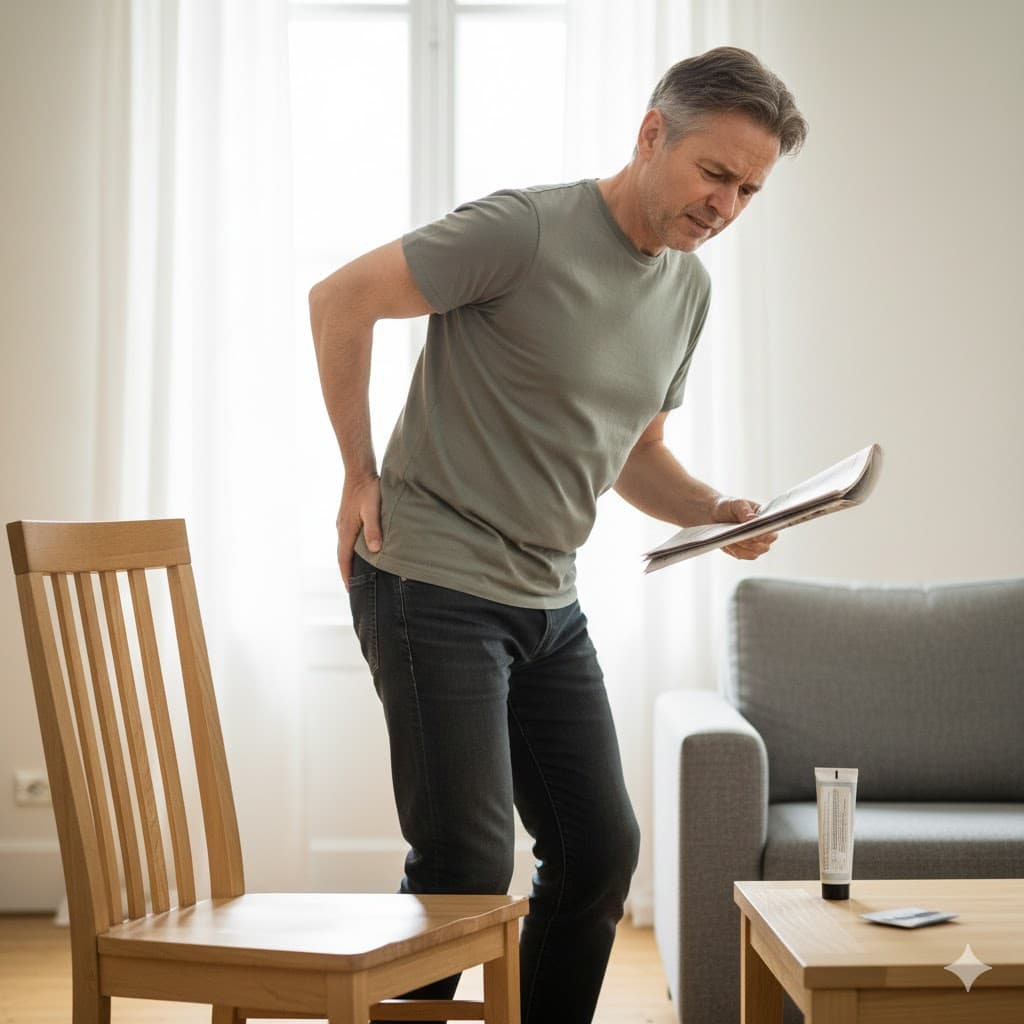
Back pain is one of the most widespread complaints today, yet according to the 5 Biological Laws developed by Dr. Hamer it is not a random disorder…
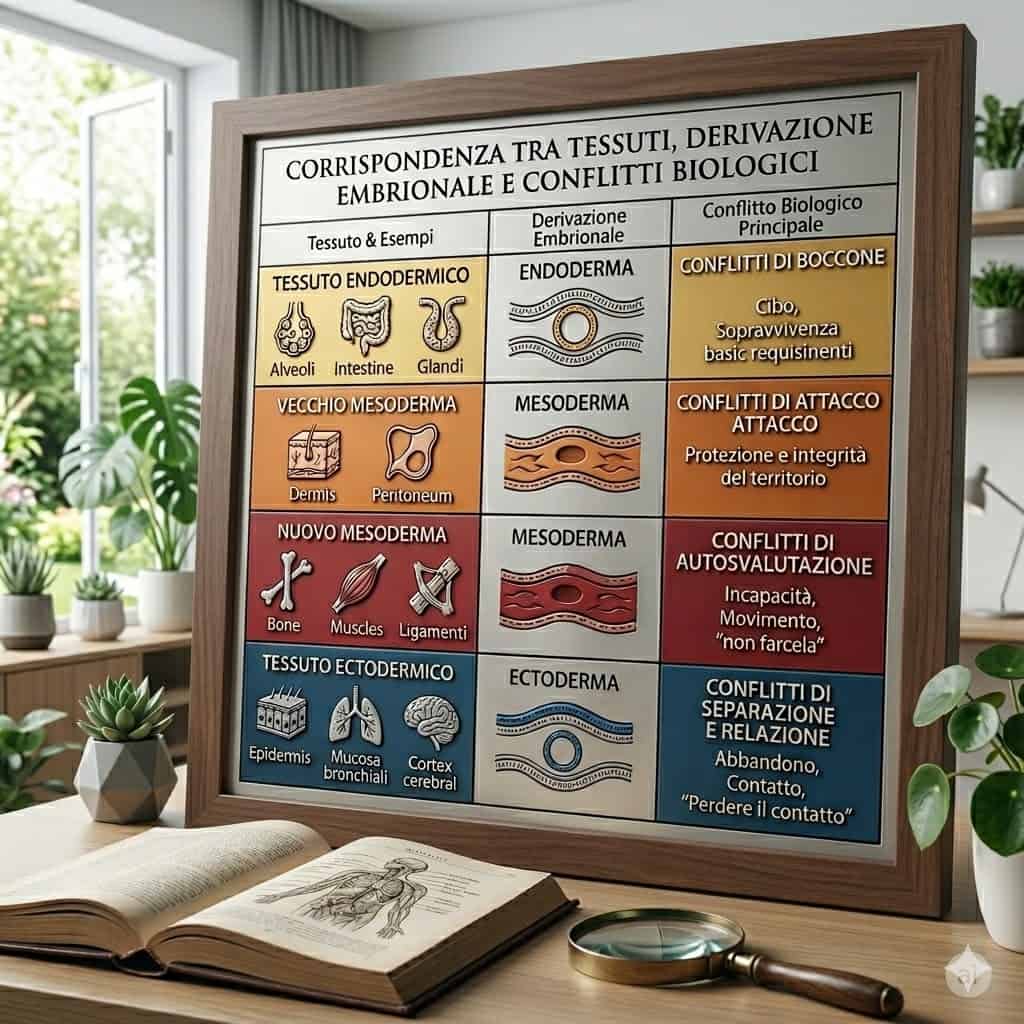
A synoptic table of tissues organised by body system, showing the correspondence between tissues, embryonic derivation (germ layers) and the associated biological conflict according to Dr. R.G. Hamer.
| Tissue | Embryonic Derivation | Biological Conflict |
|---|---|---|
| Oral submucosa | Endodermal | Conflict of an attack suffered in the mouth (unexpected morsel, oral aggression) |
| Palate | Endodermal | Conflict of not being able to catch hold of the morsel or the information |
| Oral mucosa | Ectodermal | Separation conflict / unwanted contact in the oral area |
| Mucosa of the upper two-thirds of the oesophagus | Ectodermal | Conflict of fear of not being able to swallow the morsel / territory |
| Oesophagus – lower third (submucosa) | Endodermal | Conflict of not being able to swallow the morsel (fear of not managing to assimilate something) |
| Greater curvature of the stomach (submucosa) | Endodermal | Conflict of not being able to digest the morsel, hunger conflict (archaic indigestion) |
| Gastric mucosa – lesser curvature | Ectodermal | Territorial anger conflict / having to submit |
| Duodenum (submucosa) | Endodermal | Territorial anger conflict – “something is being unjustly taken from me” |
| Columnar epithelium of the gastrointestinal tract | Endodermal | Conflict of not being able to digest / assimilate the morsel |
| Small intestine, large intestine and sigmoid colon | Endodermal | Conflict of indigestible anger / vile and repugnant morsel |
| Rectal submucosa | Endodermal | Archaic existence conflict / not being able to expel the morsel |
| Rectal mucosa | Ectodermal | Identity conflict (M) / territorial anger conflict (F) |
| Smooth muscle – general entry | Endodermal | Archaic biological conflict linked to peristalsis / survival |
| Smooth muscle of the intestinal tract | Mesodermal (New) | Self-devaluation conflict relating to movement / powerlessness to move |
| Striated muscle of the rectum | Mesodermal (New) | Self-devaluation conflict / not being able to hold back |
| Annular muscle of the anal sphincter | Mesodermal (New) | Self-devaluation conflict / control of the territory |
| Greater omentum | Mesodermal (Old) | Conflict of an attack against the abdomen / visceral aggression |
| Peritoneum | Mesodermal (Old) | Conflict of an attack against the abdomen (kick, blow, violation) |
| Tissue | Embryonic Derivation | Biological Conflict |
|---|---|---|
| Parotid glands (acinar parenchyma) | Endodermal | Conflict of not being able to catch hold of the morsel / fear of not having food |
| Sublingual salivary glands (acinar parenchyma) | Endodermal | Conflict of not being able to catch hold of the morsel / fear of not having food |
| Parotid and sublingual ducts (squamous epithelium) | Ectodermal | Separation conflict / demarcation in the oral area |
| Tissue | Embryonic Derivation | Biological Conflict |
|---|---|---|
| Pulmonary alveoli | Endodermal | Conflict of fear of death / of suffocation (fear of not surviving) |
| Bronchioles – submucosa | Endodermal | Territorial fear conflict / not being able to breathe in one’s own territory |
| Bronchial mucosa (squamous epithelium) | Ectodermal | Conflict of fear in the territory / threat in the territory |
| Larynx (squamous epithelium) | Ectodermal | Conflict of sudden fright / sudden fear in the throat |
| Branchial arches (squamous epithelium) | Ectodermal | Frontal fear conflict (cancer panic; sudden fear) |
| Nasal mucosa and paranasal sinuses | Ectodermal | Olfactory fear conflict / threatening or repugnant smell |
| Pleura | Mesodermal (Old) | Refugee conflict / feeling rootless or without shelter |
| Tissue | Embryonic Derivation | Biological Conflict |
|---|---|---|
| Liver parenchyma | Endodermal | Conflict of fear of starving / famine, lack of resources |
| Bile ducts (squamous epithelium) | Ectodermal | Territorial anger conflict / “something is being unjustly taken away from me” |
| Pancreatic parenchyma (except ducts and islets) | Endodermal | Anger conflict / fear of not being able to digest an unbearable situation |
| Pancreatic ducts (squamous epithelium) | Ectodermal | Territorial anger conflict / “something I hoped for is being taken from me” |
| Pancreatic alpha cells – glucagon (islets of Langerhans) | Ectodermal | Fear-disgust-repulsion conflict → hypoglycaemia |
| Pancreatic beta cells – insulin (islets of Langerhans) | Ectodermal | Conflict of opposition / resistance → diabetes |
| Tissue | Embryonic Derivation | Biological Conflict |
|---|---|---|
| Renal collecting tubules | Endodermal | Refugee / existence conflict: feeling alone and abandoned, rootless |
| Renal parenchyma | Mesodermal (New) | Fluid conflict (water/urine) / biological conflict relating to fluid |
| Renal pelvis and ureters (squamous epithelium) | Ectodermal | Identity conflict / demarcation of the territory (male or female) |
| Trigone of the bladder | Endodermal | Repugnant sexual conflict / contamination of the intimate territory |
| Bladder mucosa (except trigone) | Ectodermal | Territorial marking conflict: M = outwards; F = inwards |
| Striated muscle of the bladder | Mesodermal (New) | Self-devaluation conflict linked to urinary control |
| Annular muscle of the bladder sphincter | Mesodermal (New) | Self-devaluation conflict / control of the sphincter |
| Tissue | Embryonic Derivation | Biological Conflict |
|---|---|---|
| Mucosa of the body of the uterus | Endodermal | Repugnant sexual/semi-sexual conflict / severe nest conflict |
| Bartholin’s glands | Endodermal | Repugnant sexual conflict / violation of sexual intimacy |
| Fallopian tubes | Endodermal | Conflict of not being able to hold on to the child / separation from child or partner |
| Ovarian tissue – parenchyma | Endodermal | Loss conflict (of a child, partner, loved one) / nest conflict |
| Ovarian interstitial tissue | Mesodermal (New) | Self-devaluation conflict relating to femininity |
| Uterine smooth muscle | Mesodermal (New) | Self-devaluation conflict relating to reproduction |
| Muscle of the cervix | Mesodermal (New) | Self-devaluation conflict in the sexual sphere |
| Annular muscle of the cervical sphincter | Mesodermal (New) | Self-devaluation conflict / control and closure |
| Mucosa of the cervix and cervical opening | Ectodermal | Sexual frustration conflict / of not being taken |
| Vaginal mucosa | Ectodermal | Sexual separation conflict / unwanted sexual contact |
| Tissue | Embryonic Derivation | Biological Conflict |
|---|---|---|
| Testicular tissue – parenchyma | Endodermal | Loss conflict (of a loved one, child, partner) |
| Testicular interstitial tissue | Mesodermal (New) | Self-devaluation conflict relating to masculinity |
| Prostate | Endodermal | Repugnant sexual conflict / vile semi-sexual conflict |
| Smegma-producing glands | Endodermal | Repugnant sexual conflict / violation of genital intimacy |
| Tissue | Embryonic Derivation | Biological Conflict |
|---|---|---|
| Thyroid gland – acinar parenchyma | Endodermal | Powerlessness conflict / of not having been quick enough to reach the morsel |
| Thyroid ducts (squamous epithelium) | Ectodermal | Powerlessness conflict / urgency with no way out |
| Posterior pituitary | Endodermal | Biological conflict linked to hormonal regulation / survival |
| Adrenal medulla | Endodermal | Conflict of sudden fright / acute fear of not surviving |
| Adrenal cortex | Mesodermal (New) | Persistent self-devaluation conflict / chronic territorial stress |
| Tissue | Embryonic Derivation | Biological Conflict |
|---|---|---|
| Epidermis | Ectodermal | Separation conflict / loss of contact (skin as the organ of contact) |
| Dermis | Mesodermal (Old) | Attack / disfigurement conflict / violation of physical integrity |
| Adipose tissue | Mesodermal (New) | Self-devaluation conflict / protection and energy reserve |
| Periosteum | Ectodermal | Brutal separation conflict (violent physical detachment) |
| Tissue | Embryonic Derivation | Biological Conflict |
|---|---|---|
| Mammary gland – parenchyma | Mesodermal (Old) | Nest conflict: worry about a child or a partner (care conflict) |
| Milk ducts (squamous epithelium) | Ectodermal | Conflict of separation from the mother or the child / refugee conflict |
| Tissue | Embryonic Derivation | Biological Conflict |
|---|---|---|
| Lymphatic tissue – lymph nodes | Mesodermal (New) | Self-devaluation conflict / frontal fear conflict (in repair) |
| Spleen | Mesodermal (New) | Bleeding or injury conflict (physical or symbolic trauma) |
| Tissue | Embryonic Derivation | Biological Conflict |
|---|---|---|
| Striated muscle (general) | Mesodermal (New) | Self-devaluation conflict relating to movement / physical performance |
| Connective tissue | Mesodermal (New) | Self-devaluation conflict (necrosis in the CA phase, sarcoma in PCL) |
| Tendon tissue | Mesodermal (New) | Self-devaluation conflict / not managing to “hold on” to something |
| Cartilage tissue | Mesodermal (New) | Self-devaluation conflict / joint conflict of weight and movement |
| Bone tissue | Mesodermal (New) | Self-devaluation conflict (osteolysis in the CA phase, recalcification in PCL) |
| Teeth – dentine | Mesodermal (New) | Devaluation conflict / not being able to bite or defend oneself |
| Teeth – enamel | Ectodermal | Conflict of fear in the back of the neck / fear of a predator lying in wait |
| Tissue | Embryonic Derivation | Biological Conflict |
|---|---|---|
| Arterial wall (tunica media) | Mesodermal (New) | Self-devaluation conflict relating to circulation |
| Intima of the coronary arteries and veins | Ectodermal | Territorial conflict (M) / sexual frustration conflict (F) |
| Venous wall (tunica media) | Mesodermal (New) | Self-devaluation conflict / fluid conflict |
| Myocardial tissue (striated part) | Mesodermal (New) | Territorial conflict (epileptoid crisis = myocardial infarction) |
| Pericardium | Mesodermal (Old) | Conflict of an attack against the heart / threat to the central organ |
| Tissue | Embryonic Derivation | Biological Conflict |
|---|---|---|
| Iris – smooth muscle | Endodermal | Conflict linked to light / not being able to regulate what one sees |
| Lacrimal glands | Endodermal | Refugee / existence conflict (water retention, feeling abandoned) |
| Tear ducts (squamous epithelium) | Ectodermal | Separation conflict in the eye area / tears held back |
| Eyelid and conjunctiva (squamous epithelium) | Ectodermal | Visual separation conflict / not wanting to see something |
| Vitreous body, cornea and lens | Ectodermal | Conflict of fear in the back of the neck / fear of a wild beast lying in wait |
| Tissue | Embryonic Derivation | Biological Conflict |
|---|---|---|
| Middle ear | Endodermal | Conflict of not having received / not being able to get rid of a “morsel of information” |
| Eustachian tube | Endodermal | Auditory morsel conflict / unacceptable information that cannot be processed |
| Tissue | Embryonic Derivation | Biological Conflict |
|---|---|---|
| Tonsils | Endodermal | Conflict of not being able to catch hold of the morsel (food or information) on the right side |
| Adenoids – pharynx | Endodermal | Conflict of the morsel not received / fear of not being able to breathe or receive nourishment |
| Tissue | Embryonic Derivation | Biological Conflict |
|---|---|---|
| Inner part of the navel | Endodermal | Archaic biological conflict linked to the umbilical cord / primordial separation |
© 2026 5leggibiologiche.it – All rights reserved. Distribution or publication in any form is prohibited. The content relating to biological conflicts is based on the Germanic New Medicine of R.G. Hamer.
Share
Back pain is one of the most widespread complaints today, yet according to the 5 Biological Laws developed by Dr. Hamer it is not a random disorder…
To truly understand the common cold and rhinitis according to the 5 Biological Laws, we need to start from one fundamental principle…
Conventional medicine sees haemorrhoids as a local problem of the rectal veins; the 5 Biological Laws read them as the sign of a deeper conflict…