

Back Pain According to the 5 Biological Laws
Back pain is one of the most widespread complaints today, yet according to the 5 Biological Laws developed by Dr. Hamer it is not a random disorder…
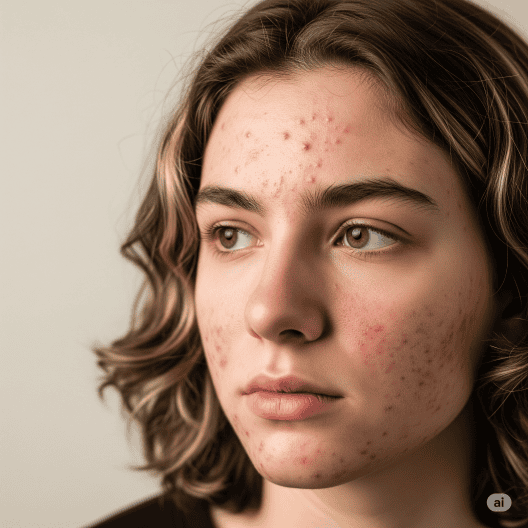
Understanding acne and pimples can be frustrating, especially when conventional solutions don’t seem to work. But what if I told you that these skin manifestations are not a “problem” to be fought, but rather a meaningful biological process set in motion by your body? The 5 Biological Laws offer us a revolutionary perspective, seeing acne as a genuine “biological program” with a deep, biological meaning.
According to the 5 Biological Laws, every physical symptom is a phase of a Significant Biological Special Program (SBS), triggered by a Biological Shock (DHS). In the case of acne and pimples, the shock mainly concerns the dermis (Old Mesoderm), one of the layers of the skin.
The dermis, which lies just beneath the epidermis (the outermost layer, the one we touch), has a crucial protective function. It is like our outer “armour”, and within it lie the sebaceous glands, which produce sebum to lubricate the skin, and the sweat glands.
There are two main biological conflicts that activate an SBS involving the corium:
When you experience one of these emotional “shocks”, the body starts an immediate, invisible response in the skin.
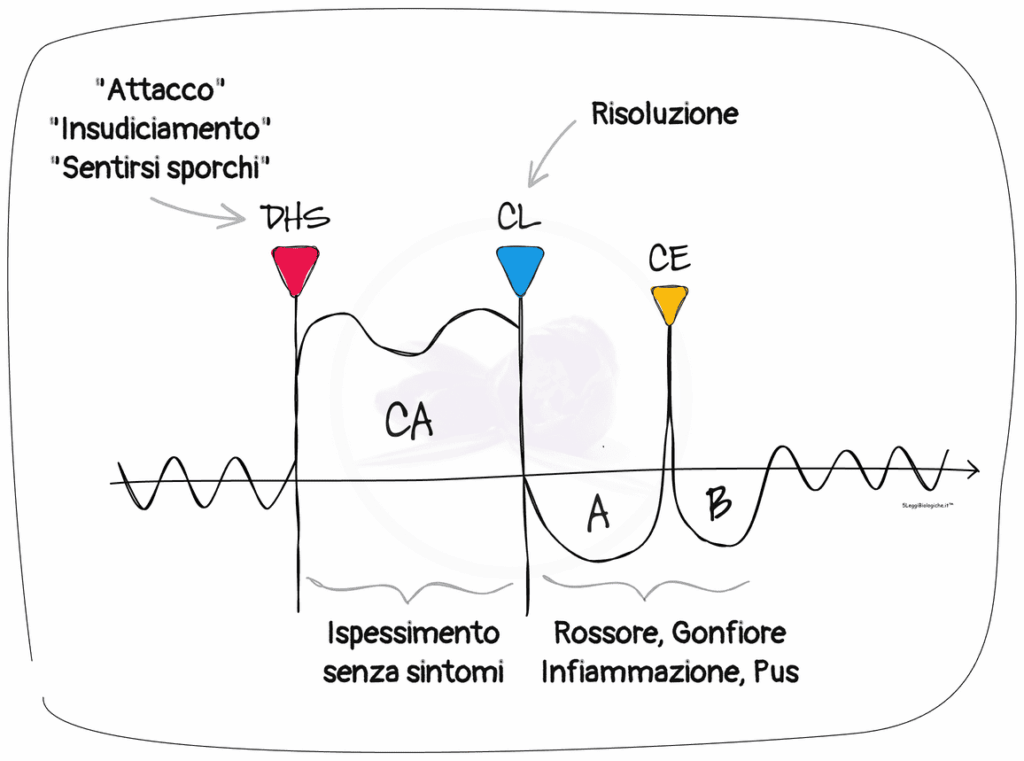
During this first phase, while the conflict is still active, your body is already working to “defend itself”. In the dermis, the cells of the sebaceous glands proliferate. The biological purpose is twofold:
In this phase, the skin may look slightly uneven or “bumpy”, but the inflamed pimples typical of acne are not yet present.
The symptoms we associate with acne – red, swollen, inflamed pimples, sometimes with pus – appear in the healing phase (or PCL phase, Post-Conflictolysis). This phase is activated only once the original conflict has been resolved. You have got over the criticism, you have accepted your appearance, or the situation that made you feel “dirty” has come to an end.
At this point, your body switches to “repair mode”. Microbes, such as bacteria, come into play not as enemies causing infection, but as biological “helpers”. Their task is to remove the extra cells that were produced during the conflict-active phase.
This process of “cleaning up” and rebuilding produces the symptoms we see:
So a pimple is not an indication that something is wrong, but rather a positive signal that your body is completing a biological process. It is proof that you have come out of a conflict situation and that your organism is returning to balance.
Acne can often seem persistent or “chronic”. According to GNM, this happens for two main reasons:
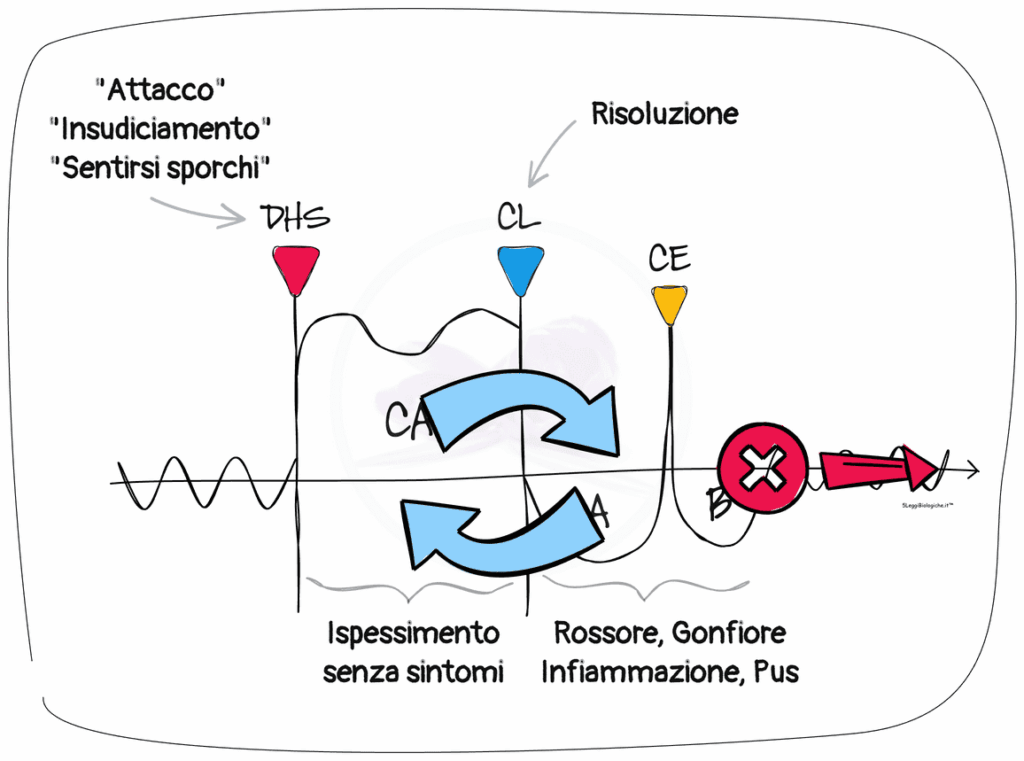
Understanding this mechanism can be liberating. It is not about “defeating” an infection, but about understanding your body’s biological message and working on the origin of the conflict. When a person manages to resolve the underlying conflict and defuse the “tracks”, the skin has the chance to complete its healing cycle and return to normal.
Back pain is one of the most widespread complaints today, yet according to the 5 Biological Laws developed by Dr. Hamer it is not a random disorder…
A synoptic table of tissues by body system, showing the correspondence between tissues, embryonic derivation (germ layers) and biological conflict…
To truly understand the common cold and rhinitis according to the 5 Biological Laws, we need to start from one fundamental principle…